
Too much money for judicial campaigns and not enough for court operations are causing a serious crisis in the nation’s court systems, according to a Miami federal judge.
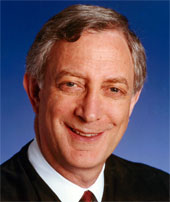
U.S. District Judge Alan Gold, who has served since 1997, told members of the Villages Civil Discourse Club Monday that campaign contributions for elected judges undermine independence while funding cuts for court operations have spawned ballooning caseloads.
“I think it’s a threat to our essential democratic system of government,” said Gold, who lives in the Village of Gilchrist. “Judicial independence guarantees the rule of law.”
He said a fictional scenario from John Grisham’s novel The Appeal has played out in real life. In the novel, a billionaire funds the defeat of a dissenting judge to win a toxic waste lawsuit. In West Virginia, a coal company paid for more than half the campaign of a judge to overturn a $50 million judgment. In Wisconsin, business groups contributed heavily to a judicial campaign to thwart a challenge against a law that restricted collective bargaining.
Gold said campaign money has become a major problem in judicial elections. In Iowa, three judges were out-spent and ousted in 2010 after they upheld a ruling that allowed same-sex marriages. Last year, three Florida judges spent $4 million on their campaigns to retain their seats on the bench.
While state judges often are elected, federal judges are somewhat protected from politics because they are appointed for life.
But Gold said the appointments themselves have become a hot political issue. In August, the federal system had 90 judicial vacancies and 44 appointments awaiting congressional action.
The 2010 U.S. Supreme Court decision known as Citizens United lifted restrictions on spending by political action committees and a current Supreme Court case could abolish limits on individual campaign contributions. If judicial campaign money becomes less restricted, Gold said voters at least should know who makes donations.
“For me, transparency is the only present answer,” he said, adding that New Mexico and North Carolina have merit selection of state judges instead of elections.
While there’s too much special interest money for judicial campaigns, Gold said funding has tightened for court operations at both the state and federal levels. Sequestration cut $350 million this year from the federal judicial budget and another 10 percent cut is scheduled in January.
A hiring freeze prevents replacement of district attorneys and public defenders and FBI training classes have been discontinued. The last pay increase for federal judges was in 1987.
He said the budget crunch hurts law enforcement.
“There are great risks of unsolved federal crimes,” Gold said, adding that tax money will be lost because of the inability to prosecute Internal Revenue Service and Medicare fraud cases.
At a state level, he said, some Miami judges had loads of 5,000 cases due to the foreclosure crisis.
Gold also commented on two other judicial issues.
On activist judges: “That’s a label that’s used by one side or another depending on who’s losing.”
On frivolous lawsuits: “I’d rather see people fight it out in court than on the streets. Are there abuses? Yes.”