
The potential danger of lightning, and the frequent storms which have given central Florida the dubious distinction: “Lightning Capital of the Nation,” are topics under discussion everywhere — at club meetings, home gatherings, restaurants, at postal stations, etc. Many people are fearful, especially since two Villages homes were totally gutted by lightning-fires earlier this summer.
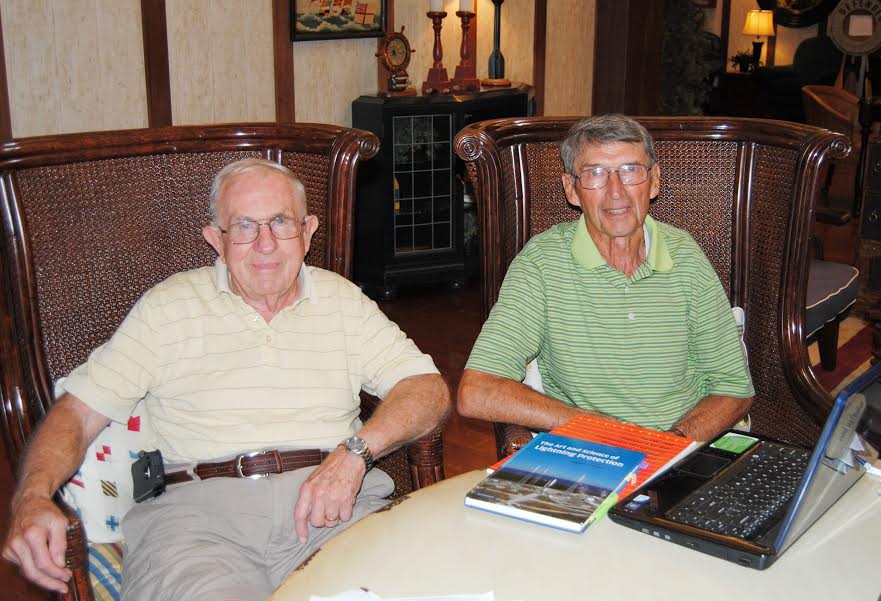
Electrical engineer and lightning expert Bob Freeman of the Village of Sanibel, has a simple, time-tested warning: When Thunder ROARS, Go INDOORS.
So, are we guilty of ignoring that warning and do we continue tooling around in our golf carts, which offer little protection, during a thunderstorm? Do we continue our water volleyball or lap swimming until lightning causes the hair to stand up on the backs of our necks; or do we get out of the water at the first sound of thunder or flash of light? Do we finish driving our bucket of golf balls? Do we wait out the storm under a few trees near the seventh tee, or call it a day?
“We used to count the number of seconds between the ‘flash’ and the ‘bang,’ and think we were safe if the storm was more than six miles away. That belief has been debunked,” Freeman said.
So how do 2014’s storms so far compare with central Florida’s average?
“After a couple of years with fewer than average storms, we may be having a somewhat more active year,” said fellow storm guru, Len Hathaway, a Village of Sunset Pointe resident. He had 30+ year career in lightning protection. “We’ve had nearly seventy storms to date, and it’s only the end of July — but risky weather tends to slow down a bit as August comes,” he continued, inferring statistics are on our side. He noted that with Florida’s many storms, relatively few homes, trees, vehicles or people are directly affected.
There are three types of lightning. Direct hits usually result in property damage and/or serious injury. Indirect strikes, which may hit the ground and radiate outward up to hundreds of feet in an area, most often result in damage to electrical appliances, but can also cause fires and injuries. Cloud-to-cloud, or sideways, lightning, sometimes seen in central Florida, does not reach the ground and does not cause damage.
“The Tampa Bay area records even more storms than we do,” Hathaway said. “They average 100 storms per season vs. our 80 — hence the name of their hockey team — the Tampa Bay Lightning!”
For homeowners who have lost their homes to lightning-induced fires, most material possessions are covered by insurance — but the emotional stress can be long-term in nature and devastating, Hathaway said
“A much higher number of surges from lightning which hits the ground and radiates to electrical wiring happen than direct hits,” Freeman said. “It is not unusual to hear of neighbors who lost microwave ovens, televisions or computers this way.”
For this reason, both Hathaway and Freeman are strong advocates of surge protection for home wiring, including the affordable surge protection systems for sale or rent from Duke or SECO utilities which serve The Villages. Additionally all electrical appliances should be plugged into surge strips, including cable and satellite TVs.
Villagers Freeman and Hathaway have formed a Lightning Study Group, and as a public service, will give slide presentations to local civic, social or church groups free of charge. “Some people volunteer at Operation Shoebox; others tutor kids. This is our way of giving back to the community,” Freeman said. [email protected] or [email protected].