Carter Poust, in a breakout performance, hovers over the musical “Company” like a lost soul wandering through scenes from a marriage.
The Villages Musical Theater production of the Steven Sondheim musical is directed by Carol Greenfield. It runs Sunday and Monday at 7 p.m. in the Savannah Center.
Poust is a professional dancer who appeared in mostly small, supporting parts in Villages theater. But in “Company,” Poust has found his leading-man niche in the role of Robert, a confused and frustrated bachelor searching for companionship and struggling with commitment.
Robert is an understated and guileless character at the crossroads of life on his 35th birthday, wondering if he will ever marry.
Poust plays this part at times with icy detachment but eventually reveals a deeper side of himself. Poust portrays Robert’s puzzling dilemma with a kind of blurry acceptance that love and marriage can often be separate entities.
It’s a skillful, nuanced performance.
“I knew Carter could dance and I knew he could sing, but until we started rehearsing, I didn’t know he could act,” Carol Greenfield said. “He did an outstanding job.”
You can see a clip from “Company,” here:
https://www.youtube.com/watch?v=cc-y3lipJLM
The same could be said for the rest of the cast. Robert must deal with five married couples, his dysfunctional, trendy and truculent New York City friends. They toss him a birthday party. But before Robert can blow out the candles he finds himself examining their relationships and marital complications.
It ain’t a pretty sight.
These are people who smoke pot, get drunk, fool around and dabble in divorce just for run. They seem caught in a nowhere land between youth and old age. Robert, at 35, is joining the club and in addition to dealing with his meddling married pals, must also cope with his three girlfriends.
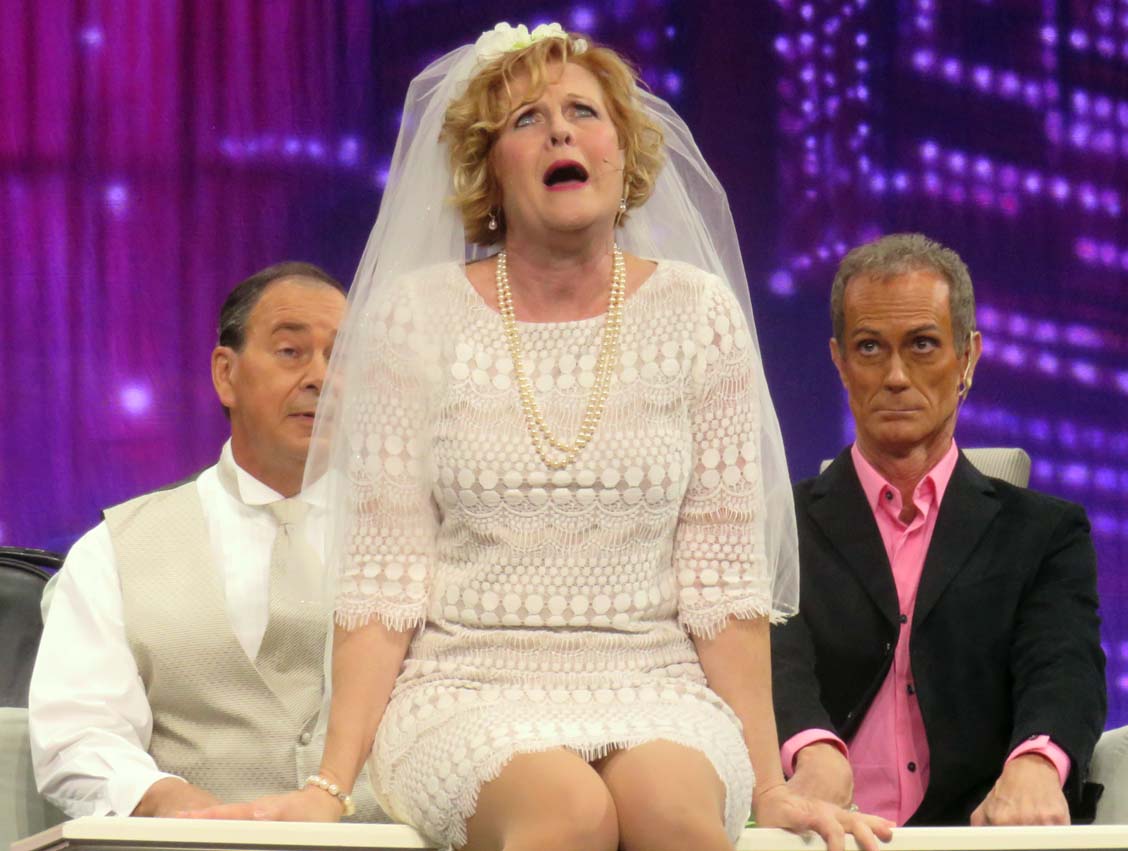
“Company” isn’t a traditional musical. It broke ground in 1970, offering a series of vignettes, tied together by Robert’s quest for the meaning of marriage. Sondheim composed the music and lyrics and George Furth wrote the score.
This is an ensemble play that works if the actors connect with each other and make the at times unwieldy story relevant. It was obvious at Saturday night’s opening that Villages production found the right people to make it work.
Terry Bleau as Amy, a ditzy and hyper bride-to-be, was irresistible with her funky white wedding dress and machine-gun rap musical delivery.
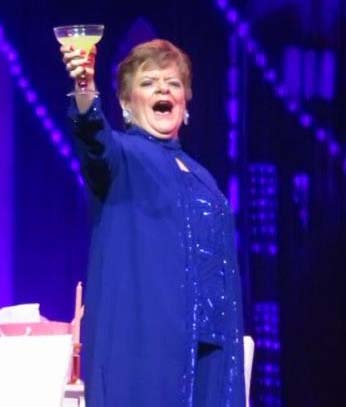
Billie Thatcher as the boozy and bossy Joanne, dominated the stage with a navy blue dress and bitter attitude. Thatcher did justice to “The Ladies Who Lunch,” as she stumbled around the stage, sipping from a martini glass and waving it around like some kind of barfly baton.
Bob Stehman as Harry and Mia Reeves as Sarah showed just how goofy marriage can turn out. They shared bourbon, brownies, karate chops and wrestling holds in a delightful romp.
Carolyn Hoffman, Sue Schuler and Sue Davis brought some old fashioned musical jive and sex appeal to the roles of Robert’s three girlfriends. Schuler delivered the goods on “Another Hundred People.”
Hoffman played April, a dim-witted flight attendant who succumbs to Robert’s bedroom seduction. Hoffman played the role to the hilt, flashing humor and lust all at the same time.

Other members of the cast also contributed: Sally Spieth, Jim Flynn, B.J. Odendahl, Bob Brandoni, Tim Casey and Bill Davis, musical director of the show. Kent Ingrum directed a 10-piece orchestra that added majesty to the production.
But the night really belonged to Poust.
He has been performing for nearly four decades, but this was his biggest acting part since coming to The Villages a few years ago.
“He brought freshness to this role,” Greenfield said.
After the show ended, Poust was surrounded by well-wishers in the Savannah Center lobby.
“I brought my heart and soul to this role,” he said. “It’s a tough role. I had to think back to my personal experience to make it work. I’m not 35 anymore but it doesn’t matter. Everybody goes through a stage of life like that, and I had to use my own experience to make it real.”
Near the end of the play, Robert sums up his life with one word: alone. Although his married friends are struggling, they have something he lacks – each other.
Is marriage and worth the price? “What do you get?” Robert wonders. He may not have an answer but he knows what he is looking for as he sings:
“Someone to hold me too close.
Someone to hurt me too deep.
Someone to sit in my chair,
And ruin my sleep,
And make me aware,
Of being alive.”