
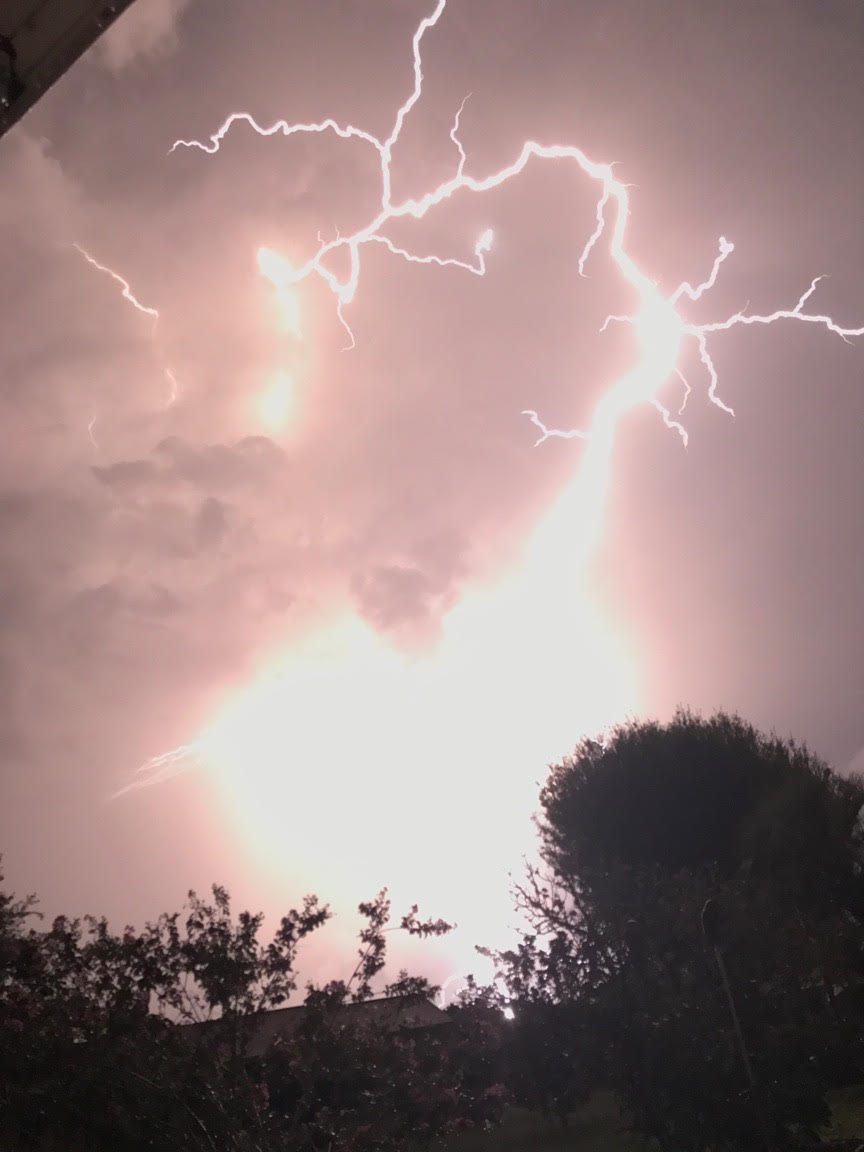
Homeowners have reported damage to a wide array of appliances and electronics that have circuit boards that are intolerant to even a relatively minor lightning-induced surge including TVs, computers, routers, printers, telephone answering machines, microwaves, dishwashers, refrigerators, garage door openers, irrigation system controllers, cable boxes, games, motorized recliners and sofas.
Indirect lightning may strike trees, flag poles, neighbors home, or some unknown nearby location. These are more common but usually less severe than a direct lightning strike that can cause significant structural damage to your home.
To protect against damage to your sensitive electronic equipment consider both primary and secondary surge protection from an indirect lightning strike. Consider the defense-in-depth concept below.
Primary Surge Protection
This is surge protection installed on your electric meter by your electric utility. For example, SECO will lease a surge protector on your meter for $5.95 per month or purchase for $349. It can also be achieved by engaging a licensed electrician to install a surge protector on a dedicated two-pole breaker on your electrical panel. This level of protection is to prevent surge damage to hard-wired equipment that you do not plug into a 120-volt wall outlet. This is not “whole house” surge protection.
Secondary Surge Protection
This level of surge protection is called point-of-use and the devices are sometimes referred to as “plug-ins.” These surge protectors plug into a 120-volt wall outlet to protect microwave ovens, garage door openers and refrigerators. Power strips are another form of secondary surge protection for televisions and computers. These devices can be purchased from electronics, hardware and big box stores.
Important Tip
Surges can also enter your home from other sources such as telephone and satellite/cable TV lines. Therefore, it is vitally important that telephone lines to an answering machine and computer be routed through a secondary surge protector. This is also true for the coaxial cable line for a television.
Len Hathaway is a resident of The Villages and is a recognized authority on lightning.