
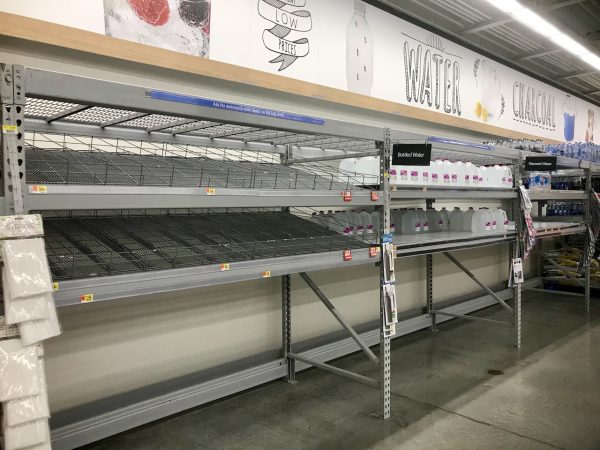
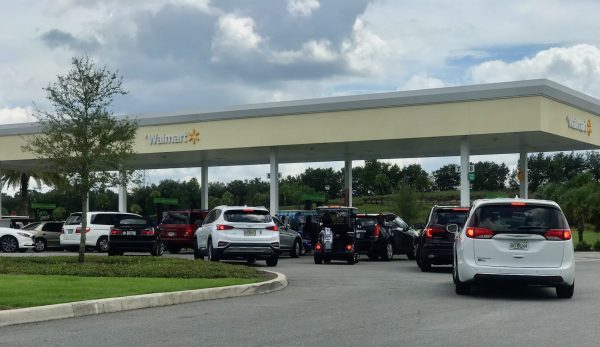
The hurricane frenzy erupted in The Villages and the tri-county area on Wednesday as residents flocked to area grocery stores, gas stations and home supply businesses.
With the devastation left behind by Hurricane Irma still fresh on their minds two years later, residents spent the day preparing for the worst-case scenario as Dorian strengthened into a Category 1 hurricane and started pelting Puerto Rico.
Some storm forecasters believe Dorian will be a category 3 hurricane by the time it roars ashore on the East Coast of the United States sometime Monday morning. Others still believe it could weaken. And no one can agree on the exact point of landfall, with predictions ranging anywhere from Savannah, Ga. to Miami.
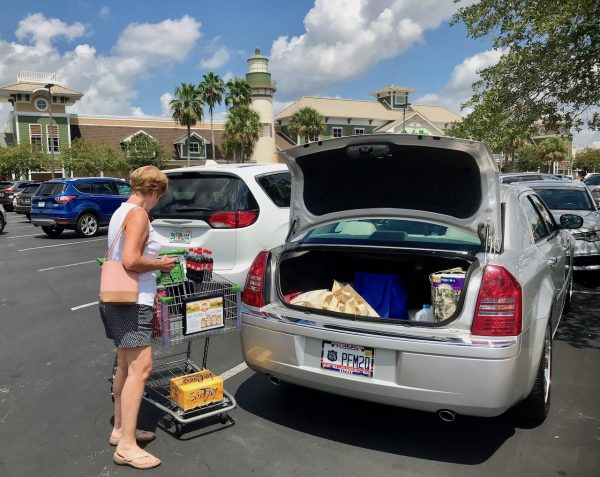
But those predictions sent a clear message to area residents – take no chances and be prepared, which was quite evident Wednesday by the amount of golf carts and other vehicles parked outside grocery stores across the community. Area residents clearly were taking the threat seriously and making sure to purchase the final items needed to round out their hurricane kits.
Not surprisingly, bottled water was high on everyone’s list and was quickly flying off the shelves. Shopping carts also contained pet food and plenty of canned food items. And loaves of bread were likely to be in short supply as the weekend neared.
Other popular, non-refrigerated food items that were being purchased included dry cereal, nuts, peanut butter, instant soup mixes, crackers, granola, energy bars, baby food, rice, pasta, pasta sauce, oats and fruits like bananas, apples and oranges.
Officials offered one caveat for those shopping for food to sustain themselves during a hurricane – don’t purchase items that you don’t normally eat. Otherwise, they say, those items are likely to still be sitting in your hurricane kit the next time a major storm hits the local area.
Also on Wednesday, batteries of all sizes were going fast, along with flashlights – it’s recommended to have one per family member – moist towelettes, garbage bags, soap, aluminum foil, toilet paper and plastic ties for personal sanitation.
Some residents who still remember long stretches of power outages during Irma were breaking down and purchasing generators. And at Home Depot in Lady Lake, shoppers were buying work gloves, tarps, buckets, duct tape, charcoal, lighters, lighter fluid, mosquito repellant, coolers, plywood and bulk supplies of paper towels.
Emergency officials also recommend filling a bathtub with water for basic sanitation and dishwashing. First aid kits also are recommended, as is a basic set of tools including a hammer, nails, screwdrivers, pliers and knives.
If the area experiences power outages, officials say it’s important to first eat perishable items in your refrigerator or pantry, followed by those in freezers. You will be able to tell those freezer foods are safe to consume if ice crystals are formed in the center of the items.
Once those items have been consumed, residents should turn to their stock of non-perishable food. Hopefully by that time the power will have been restored and residents will be able to resupply their pantries, refrigerators and freezers.
Hurricane kits should include:
- One gallon of water per person per day for at least three days, for drinking and sanitation;
- At least a three-day supply of non-perishable food with a manual can opener;
- Battery-powered or hand-crank radio;
- NOAA weather radio with tone alert;
- Flashlight;
- First aid kit;
- Extra batteries (these sell fast so be prepared);
- Whistle to signal for help;
- Dust mask to help filter contaminated air;
- Plastic sheeting and duct tape to shelter-in-place if need be;
- Moist towelettes, garbage bags and plastic ties for personal sanitation;
- Wrench or pliers to turn off utilities;
- Local maps; and
- Cell phone with chargers and a backup battery.
Additional items to consider include:
- Prescription medications in the sealed bottles they came in;
- Non-prescription medications such as pain relievers, anti-diarrhea medication, antacids or laxatives;
- Glasses and contact lens solution;
- Infant formula, bottles, diapers, wipes, diaper rash cream;
- Pet food and extra water for your pet;
- Cash or traveler’s checks;
- Important family documents such as insurance policies, identification and bank account records;
- Sleeping bag or warm blanket for each person;
- A couple of complete changes of clothing and sturdy shoes;
- Household chlorine bleach and a medicine dropper to disinfect water; and
- Fire extinguisher.
It’s also important to keep a list of pertinent contacts, such as local emergency management and government offices, hospitals, utilities, the local chapter of the American Red Cross and your insurance agent. And don’t hesitate to call 911 if you have an emergency that requires help from law enforcement, fire departments or EMS units.
Some of those numbers to have handy include:
- Lake County Emergency Management Center, 425 W. Alfred St., Tavares. (352) 343-9420.
- Marion County Emergency Management Center, 692 NW 30th Ave., Ocala. (352) 369-8100.
- Sumter County Emergency Management Center, 7375 Powell Road, Wildwood. (352) 689-4400.