
Staffing problems largely due to the COVID-19 pandemic have been the primary cause of long ambulance response delays, according to officials of American Medical Response (AMR), which operates ambulances in Sumter County.
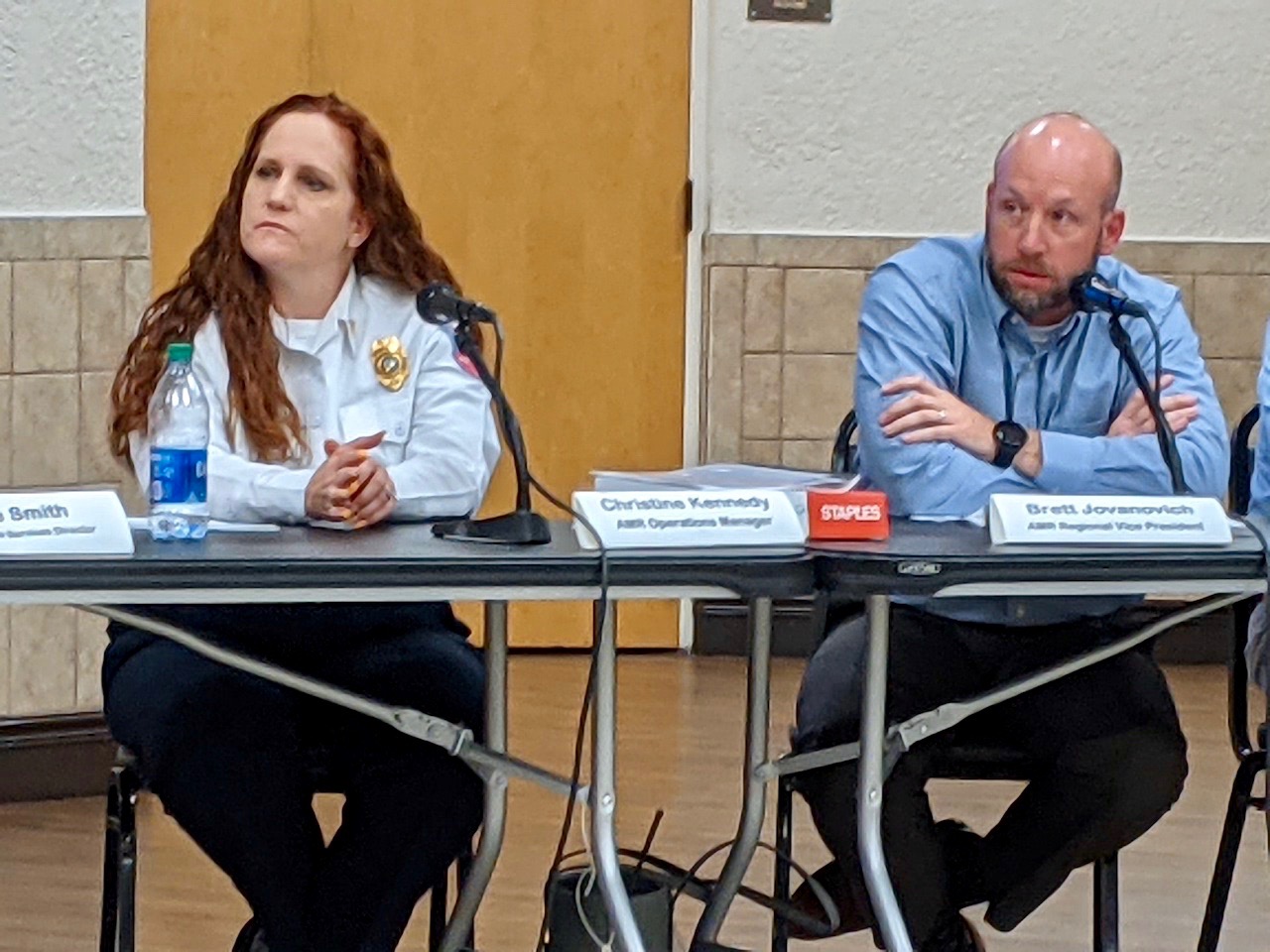
Five local and regional officials of the nationwide company gave a detailed presentation about their operations Wednesday night to members of the Ad Hoc Fire, EMS and Medical Transport Committee, appointed to investigate ambulance services and make a recommendation to county commissioners.
While firefighters, who are paramedics or emergency medical technicians (EMTs), usually arrive at a 911 call within minutes, people have reported delays of up to an hour or more for ambulances to arrive. Firefighters with the county’s two departments are not licensed to transport patients and must wait on scene.
Another issue is delay in off-loading patients at hospitals. Ambulance paramedics and EMTs must wait to transfer patients to a hospital employee of equal status, such as a registered nurse.
AMR receives $1.2 million a year from the county to operate ambulance and emergency medical dispatching services plus insurance and fee proceeds it collects from patients. The company’s contract, which requires AMR to respond to 90 percent of the calls within prescribed time limits, expires next year.
Those time limits are within 10 minutes for urban area calls, 15 minutes for suburban calls and 30 minutes for areas classified as wilderness.
Before the pandemic, AMR met the 90 percent threshold. During the first half of 2021, the company responded to only about 62 percent of those calls within the time limits. AMR responded to about 81 percent of 911 calls within the time limits in 2020. Penalty fees for not meeting the response times were waived.
“Historically, the system performed or out-performed,” said Brett Jovanovich, AMR regional vice president. “With COVID, health care throughout the world changed and the system began to fail.”
Doug Jones, AMR vice president of analytics, said the total average time for ambulance attendants to handle calls, including response, treatment and transport, has risen from about an hour to an hour and 40 minutes since COVID.
AMR employs 38 paramedics, 47 EMTs and 24 emergency medical dispatchers in Sumter County. About 40 percent of the staff has been affected by COVID, losing work time.
Training academies for paramedics and EMTs were shut down during the pandemic, which interrupted the flow of applicants.
To correct its staffing problems, the company has used pay hikes, signing bonuses and shift incentive pay since March.
A 10 percent pay raise was implemented in March with another 20 percent hike in June along with signing bonuses of $12,000 for paramedics and $6,000 for EMTs. AMR paramedics in Sumter County now earn about $60,000 a year and EMTs are paid about $45,000.
“We’re seeing a flurry of paramedic and EMT applications that are coming through the door,” said local operations head Christine Kennedy. “We do see them coming from surrounding jurisdictions.”
This spring, AMR also began two programs designed to reduce the number of emergency transports.
Kennedy said the nurse navigator program allows dispatchers to refer patients with less serious issues to a registered nurse, who can offer first aid advice or teleconferencing with an emergency room doctor.
Another program allows Medicare patients to be treated at the scene without transport. In the past, AMR was not eligible for payment unless patients were transported.
Kennedy said AMR also is working on contracts with local urgent care centers so they can be used as part of the system.
After the presentation, the AMR officials responded to questions from committee members.
Although AMR has 27 ambulances in Sumter County, Jeffrey Bogue said staffing levels aren’t high enough for all of them since about eight attendants are needed to staff an ambulance for 24 hours.
Kennedy said the company has about 10 ambulances on the road during a typical weekday.
Gail Lazenby asked why AMR waited nearly a year after the pandemic began to take action on the staffing issues.
“I would think that before March, you would have seen that down the road this was going to happen,” he said.
Jones said AMR couldn’t have anticipated the consequences of pandemic shutdowns.

During the public forum portion of the meeting, some speakers said they favored putting ambulances under fire department jurisdiction. Firefighter union officials said their international union has developed a plan to achieve that in Sumter County.
Stewart Eubanks, local union president for AMR employees, said the union and the company finalized a contract this week that provides the highest starting wages for paramedics and EMTs that he’s ever seen.
“We are in the process of rebuilding,” he said. “We want to provide the county the level of service they deserve.”