
Hydrilla growth at Lake Sumter has increased over the past few months, primarily due to a strong growing season and completion of only a partial treatment due to the severe rains.

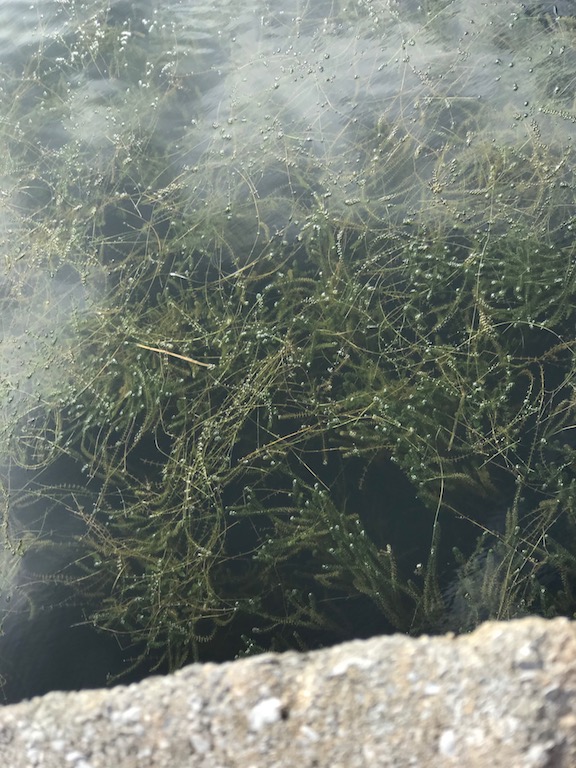
District Property Management has scheduled re-treatment of Lake Sumter and Cherry Lake, however residents may not see noticeable improvement for two to three weeks after the treatment is applied. Treatment should be completed in mid-to-late August.
Hydrilla was introduced into Florida water bodies in 1950-1951. It was thought to have been introduced to the Tampa and Miami areas as an aquarium plant. Hydrilla can grow to the surface of waters as deep as 25 feet to form dense mats and can still be found in all types of water bodies, according to the Center of Aquatic and Invasive Plants at the University of Florida.
Hydrilla continues to be sold through aquarium supply dealers and over the internet, despite being a Federal Noxious Weed and a Florida Prohibited Aquatic Plant. Each stem on a Hydrilla plant can grow 1-4 inches per day. Therefore, when hydrilla invades water bodies, ecologically-important native submersed plants such as pondweeds, tapegrass and coontail are shaded out by hydrilla’s thick mats, or are simply outcompeted and eliminated.