
One bleak California night, Johnny Mathis drove up to his home in Hollywood Hills. The 80-year old singer had just returned from a concert in Ohio. When he stopped his car, someone told Mathis there was a fire up the road in his house.
“I was thinking maybe a little fire,” Mathis would later tell reporters. Wrong. “Big fire,” Mathis said.
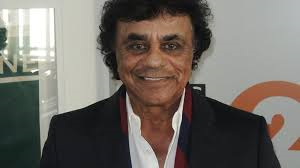
On Nov. 2, 2015, Mathis, wearing a black jacket, New York Yankees’ cap and carrying his luggage, surveyed the destructive scene with a bewildered sadness.
“The house is totaled,” Mathis spoke into a glare of television news cameras. He had lived there for 56 years, the only house he ever owned.
“There’s nothing left,” Mathis said. “A few mementoes.”
So it went, another major trial in the long, successful and sometimes challenging life of Johnny Mathis.

He performs at The Sharon on Jan. 14 and Villagers will have an opportunity to see a true American musical icon. During the course of his remarkable career, Mathis has sold more than 350 million records and is one of the most honored singers in history.
Just ask Barbra Streisand.
“When the other kids used to listen to Elvis; I listened to Johnny Mathis, modeling my style after his,” Streisand once said
But Mathis’ seemingly charmed life hasn’t been easy.
This Grammy Hall of Fame performer spans generations and has witnessed and been a part of change in American society. He is a man of color, and rose to fame in a time of racial prejudice.
He is a gay man, who sang elegant, romantic songs that helped women and men fall in love.
He has admitted battles of alcohol and drug abuse.
Through it all, Johnny Mathis endures and it will take more than fire to stop him.
On that sad November night when he lost his home, Mathis was able to put everything in perspective.
“I’m OK, nobody got hurt –that’s what’s important,” Mathis told reporters. “We can always replace things. I’m very lucky, a little sad of course, but very lucky.”
The world is lucky to be enraptured by Mathis’ music.

“I’ve always loved Johnny’s music,” said Villager Laurie Potter, 58. “I grew up with it and I never get tired of it. “Everytime I hear ‘The 12th Of Never,’ it still gets me. He’s a fantastic singer.”
Potter, a U.S. Navy veteran, has another bond with Mathis. Like him, she “came out” as gay during the early 1980s. She says, like Mathis, she is “living with the truth.”
Mathis’ music not only transcends sexual orientation but also “generations and color,” Potter said. “He is still popular and his music has lasted for all the right reasons.”
Still, back in October, 1957, when Mathis sang “Chances Are” on Dick Clark’s American Bandstand, it was a different time and different world. Revealing Mathis’ sexual identity then would have caused a scandal.
The same could be said for other gay performers of that era, including Rock Hudson, Sal Mineo, Tab Hunter and Richard Chamberlain.
“I think it’s a sign of progress that more of the people from that generation have come out,” Potter said. “It’s not a scandal anymore because performers are being honest about themselves.”
Mathis understood how times had changed when he spoke of being gay.
“There was a time when it was perceived as such a negative,” Mathis told Saga Magazine in England. “Then Elton John and others came out and it became, ‘What’s the big deal?’ I got over that a long time ago but I used to be concerned people would think it made my music not as good as that of others.”
No way, says Potter.
“His music will always be special to me and millions of other people.”
But music is only part of what makes Johnny Mathis so special.
“Johnny Mathis is easy to work with,” said Valerie Gillespie, a musician and singer who often plays The Villages, has performed with Mathis many times. She played saxophone in the orchestra backing him up.
“Johnny is a truly nice person who cares about people and treats musicians with great respect,” said Gillespie, who performs at Katie Belle’s on Jan. 21. “Not every singing star is like that.”
On stage, Mathis has a way of touching an audience.
“He has a great, lyrical voice and emotional control,” Gillespie said. “He reaches deep into the heart of a song to tell a story. Being the type of singer he is, he has to make the right choice about material. Johnny isn’t a rock and roll singer. But when he sings about love, he creates a mood and a feeling people relate to; he’s an amazing talent.”
Can Mathis still do it at 80?
“Johnny never stopped singing and he never lost what made him great,” Gillespie said. “Some singers retire and come back years later and don’t have the finesse and the timing. Johnny never retired and he’s still got it.”
Mathis is one of the most successful singers in history.
“He is the third biggest selling artist of the 20th Century and has sold over 350 million records,” said Villager and Music Historian “DJ” Al Brady.
In 1958, Mathis released the first “Greatest Hits” album in music history. It stayed on the Billboard charts for an amazing nine years (topped only by Pink Floyd’s “The Dark Side of the Moon). Mathis also had another historic best seller with his Christmas album, “Merry Christmas” in 1958 that sold millions. It’s all part of the Mathis’ mystique.
“I think he is one of those great crooners of the rock and roll era that really never sang rock and roll,” Brady said. “His music was a romantic style.”
Brady once worked with Denice Williams, who combined for an upbeat hit with Mathis called, “Too Much, Too Little, Too Late,” in 1978.
“Denice told me that his smooth style was envied by every solo singer of the time,” Brady said.
Other performers have praised Mathis. Bing Crosby called Mathis the “master song salesman” and Johnny Carson described him as “the best ballad singer in the world.” The Stereo Times reported that Ray Charles requested his duet with Mathis on “Somewhere Over the Rainbow” be played at Charles’ memorial service.

Villager Jim Borad has also been touched by Mathis’ music.
“Johnny Mathis always had that beautiful, unique voice and his music still holds up,” said Borad, a percussionist with the New Horizons Band, The Villages Concert Band, Celebration Brass Band and other local groups.
Borad used to live near Los Angeles and played drums in a band that included Ralph Mathis, Johnny’s younger brother.
“Like Johnny, Ralph was a nice guy and a talented musician,” Borad said. “He was more of a guitarist than a singer and he didn’t sound like Johnny. I don’t think any singer can sound like Johnny.”
Borad was introduced to Mathis’ music while serving in the Air Force during the early 1960s. He bought a copy of Mathis’ greatest hits album and those songs linger in Borad’s musical memory until this day. Songs like “Small World,” “Misty” and “It’s Not for Me to Say,” still matter to Borad.
“It’s funny, you hear those songs at a youthful time of your life and they stay with you,” Borad said. “I was in the Air Force, away from home and it was kind of a bittersweet time. I think that’s why that music meant so much to me.”
For Johnny Mathis, the music goes on.
“When I wake up in the morning, the only thing that pops into my head is that I’m going to have to sing,” he recently told the Washington Times. “I’m so grateful that I like the sound that comes out.”
It’s the music that matters most for Johnny Mathis.
“When I heard he was gay, it really didn’t matter to me,” Jim Borad said. “With Johnny Mathis, it’s the music that matters.”