
When 15-year-old Anne Seeger arrived in New York in 1952 with her parents and younger brother, the family had $3 and a small trunk containing her mother’s wedding dress. The dress had played, and would continue to play, a significant role in her life.
The family settled in Queens, which had a large German population, both parents went to work, and Anne and her brother went to school, even though neither spoke English at the time.
“It wasn’t that difficult,” Anne recalls. “There were many students who had come from Germany and we helped each other. I enjoyed school.”
Then she met a handsome German exchange student, they married, moved to Poughkeepsie, settled down and had two children, Susan and Charlie. Her life in America was very different from the years she had spent as a child in war-torn Yugoslavia and Austria during World War II.
Anne was born in a rural area now called Kocevje, in south central Slovenia. The borders of Austria and Yugoslavia had moved around several times prior to World War II, and when Anne was born the territory was part of Yugoslavia. Some of the German-speaking families there had lived on their farms for centuries. In the late winter of 1941 German troops arrived and told the residents that they had two hours to pack up and move. No one knew where they were going.
“We had a horse and a hay wagon and whatever my parents could get into it. We joined other members of our family in a line of refugees in wagons that stretched for miles.” In all, 42 members of her extended family were in the forced march, camping under their wagons, scavenging for food. Weeks later they arrived in Graz, Austria, some 200 miles away.
“We didn’t have any place to stay, but my father had an aunt in the area with a small house and farm. All 42 of us stayed with her for more than a week. It was very crowded with one outhouse,” she says remembering the ordeal. One of the biggest fears, as a child, came from not knowing what was going on. The adults weren’t much better off.
German troops took Anne’s family to a deserted farm outside Graz, gave them food and household implements and told them the property was theirs.
“I didn’t know who the owners were, but it appeared that the Germans had forced them out,” she remembers. She recalls adults taking about how the German authorities wanted to bring outlying German families together in places like Graz.
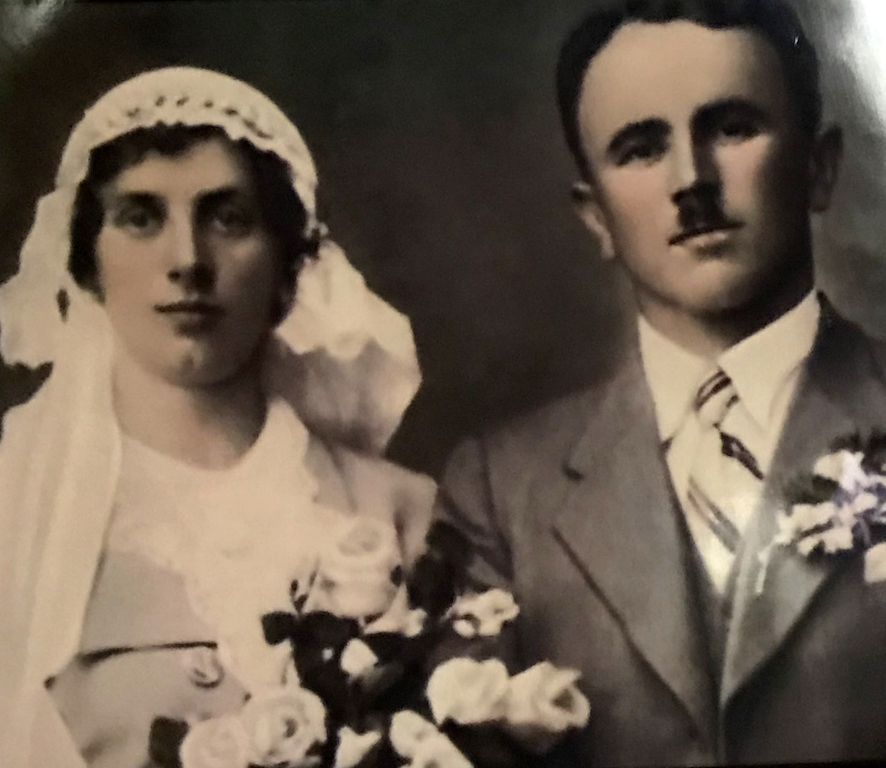
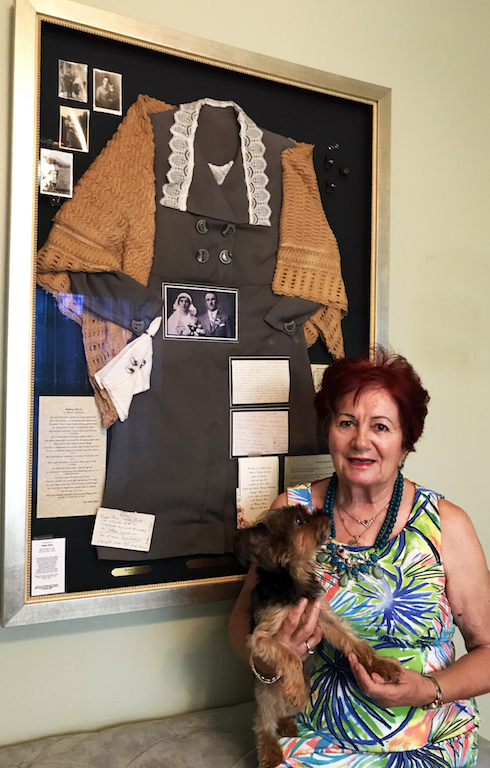
Life did not get much better. Anne’s father was conscripted into the German army and sent to Russia where he would remain until the War ended. With her mother she scratched out an existence as the fighting swirled around them. In 1945 Anne and her mother took refuge in a tiny alcove or closet in the house as fighters, she calls them “partisans – I’m not sure which side they were on.” — created chaotic conditions. Although they had little food or water, they stayed hidden for 10 days. “We were afraid to come out. We thought that if we came out the soldiers would shoot us.” Her mother’s 1937 wedding dress, hand-sewed and gray, was also in the alcove and when they were rescued they found two bullet holes in the waist courtesy of the partisans who had been firing into the house.
“We were on the far end of the village, so we were among the last to be rescued by the Americans.” Anne fondly recalls that the Americans gave the children chocolate bars. “They were really wonderful.”
Anne’s father returned from the Russian front and found them, but was then arrested and sent to a prison camp in Hungary for two years. She is not sure of the circumstances.
“My mother knew, I think, but, I’m not certain what happened. I just know that he reappeared again one summer, and our lives resumed more normally once again.” Her father took up his old railway job and her mother worked the farm.
In April 1952 the family boarded a converted troop ship and crossed the rough Atlantic.
“It took 11 days. There were about 40 people in our dormitory area and many of them were sick coming over. The conditions were probably inconceivable today.”
Anne’s father worked in a butcher shop and her mother as a domestic. Like many immigrant families they scrimped and saved and after a few years and a loan from a family member, they bought their first house, a duplex two-family home, in the late ‘50s.
“It cost $7,000,” Anne recalls. By the time her father died at the age of 97, he had owned several progressively bigger properties.
Upon his death, another old mystery from the war was resolved. “My father always said that he still had a Russian sniper’s bullet lodged in his clavicle.” The undertaker confirmed it. “He always credited the thick German Army winter overcoat and the cold for saving his life. The coat soaked up the blood which froze and stopped the wound.”
After her mother passed away at age 94, the wedding dress with the bullet holes emerged.
“I had kept it in a trunk under my bed for 25 years,” she explains. “Then I decided to put it on display to tell my story.” Blocked and framed, the dress, along with old photos and mementos, is the centerpiece in a bedroom of her home in the Village of Hemingway.
Away on a business trip, Anne’s husband had a fatal heart attack in 1981. Alone with two children in their 20s, she continued her career as a secretary, as a representative for the Dale Carnegie organization and time in the hospitality industry.
Almost on a whim she visited Florida, bought a home in Spring Hill, then moved to Palm Harbor and, 10 years ago, moved to The Villages where she shares her home with her Yorkie, Emmi. Her children and three grandchildren come to visit often. They marvel at the old wedding dress and trials their mother — and grandmother — went through when she was just a child.
John W Prince is a writer and Villages resident. Learn more at www.GoMyStory.com.