
The holidays are a time when children and grandchildren are visiting The Villages and it’s only natural they are fascinated by the abundant wildlife here in Florida’s Friendliest Hometown.
And it can be tough for grandparents to fight the temptation to allow their young visitors to feed the amazing critters.

However, feeding wildlife is generally discouraged and, in some cases, illegal. In Florida, it is illegal to feed manatees, Sand Hill Cranes, bears, raccoons, foxes and alligators. Intentionally placing food or garbage, allowing the placement of food or garbage, or offering food or garbage in such a manner that it attracts black bears, foxes, raccoons or sandhill cranes and thereby creates a public nuisance is prohibited.
Larry the Alligator was the star for years at a pond near Brownwood. But he had to be captured earlier this year and moved to Gatorland in Orlando. Officials said there was evidence that Larry the Alligator was being fed by humans.

Additionally, intentionally feeding species listed as threatened, endangered, or of special concern – including Florida scrub-jays – is prohibited unless authorized by Florida Fish and Wildlife Conservation Commission permit. Feeding listed species is prohibited because it can negatively alter feeding behavior in some species and can cause them to become accustomed to people.
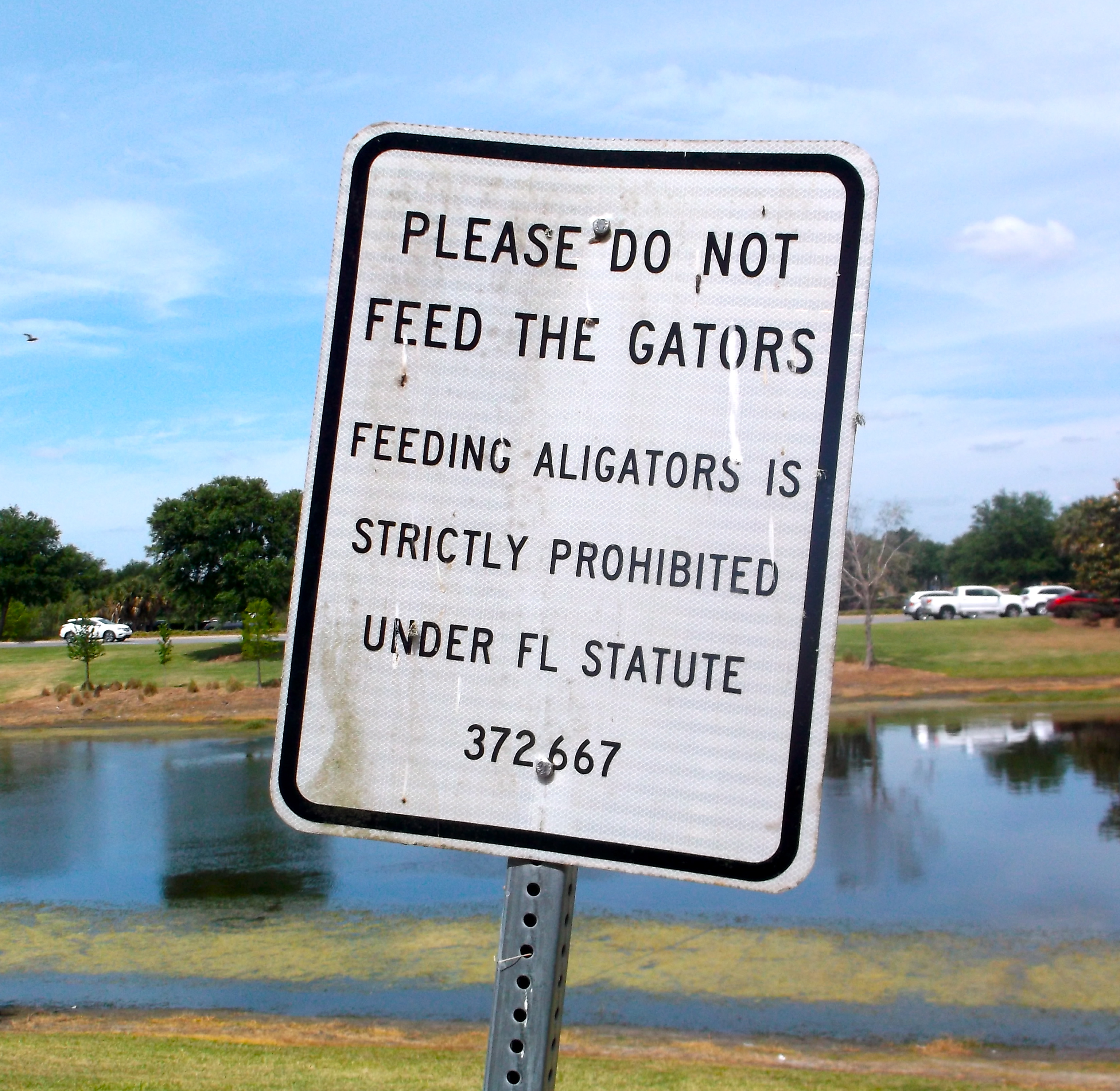
Feeding wildlife often has a detrimental rather than a helpful effect. Feeding animals may cause some species to concentrate so much on this supplemental feeding that they become a nuisance or a threat to people (e.g., bears, sandhill cranes). When fed, alligators can overcome their natural wariness and learn to associate people with food. When this happens, some of these alligators have to be removed and killed.
Feeding stations where wildlife congregates also can help spread diseases among wildlife. In addition, some food that is fed to wildlife is considered “junk food” to animals. Things like bread and other human staples are generally poor substitutes for naturally occurring foods that wildlife finds in the wild.
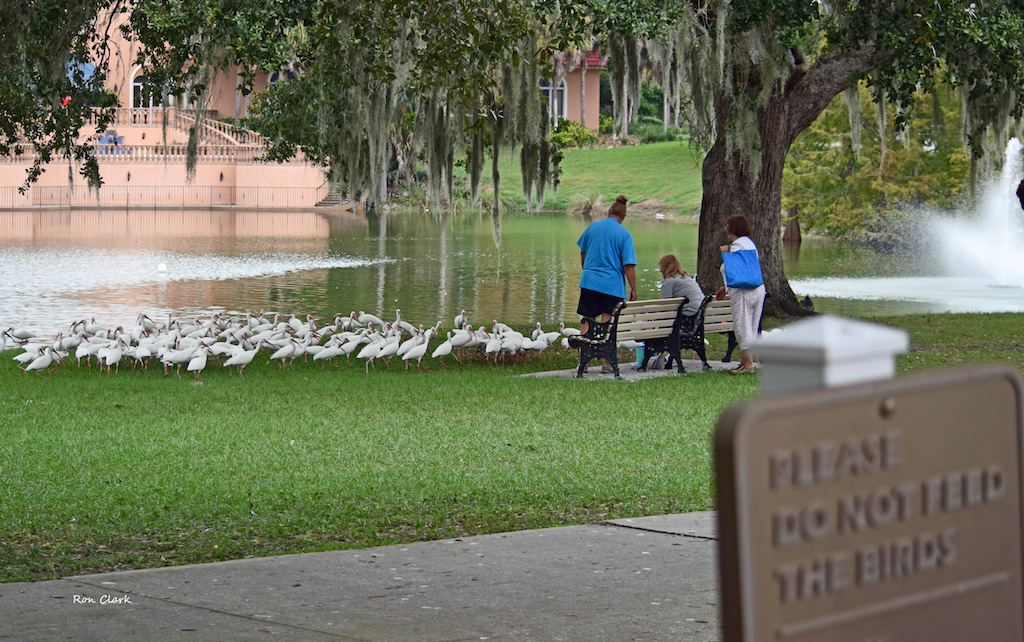
If you maintain a bird feeder, it should be stocked with the proper feed and cleaned regularly.
Feeders should be cleaned at least once every two weeks with soapy water and rinsed in a 10 percent bleach solution. Feeding birds responsibly can be a fun and safe activity. However, if you attract nuisance species (such as bears or Sand Hill Cranes), you must stop feeding until these animals are no longer visiting your property. Intentionally attracting listed species to a feeder is prohibited.