
Veterans and first responders received potentially life changing drug-assisted therapy at Operation Field Trip’s latest event on Saturday.
Operation Field Trip is a program by Combat Veterans to Careers, located at 400 E Gulf Atlantic Hwy., Wildwood, in partnership with the Take A Knee Foundation. With services provided by Emerald Medical, a clinic based in Vero Beach, participants undergo medically assisted ketamine therapy combined with integrative counseling to help with PTSD, depression and anxiety.
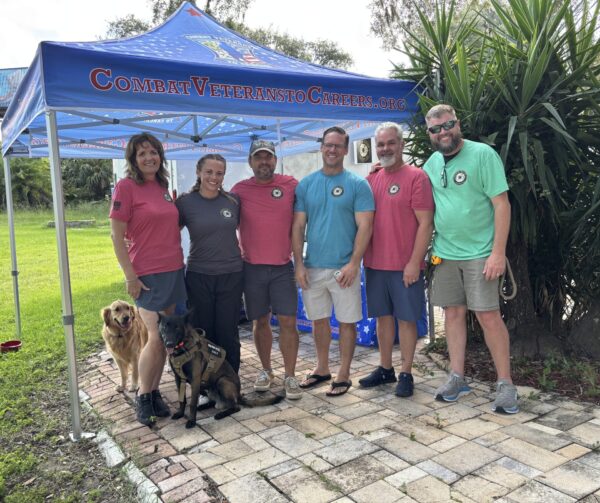
At the beginning of each session, participants checked in with staff, including Mandy Espinal, the chief operating officer at Emerald Medical who helped start the program. She joined the Wisconsin National Guard at 17 years old and served as an Army combat medic for six years before retiring for medical reasons. She helped develop the treatments after moving to Florida in 2016 and found herself full of hope.
“I used to be on a lot of pain and anxiety meds, which is not a way to live,” said Espinal. “Doing this was like five years of talk therapy slammed into a few treatments.”
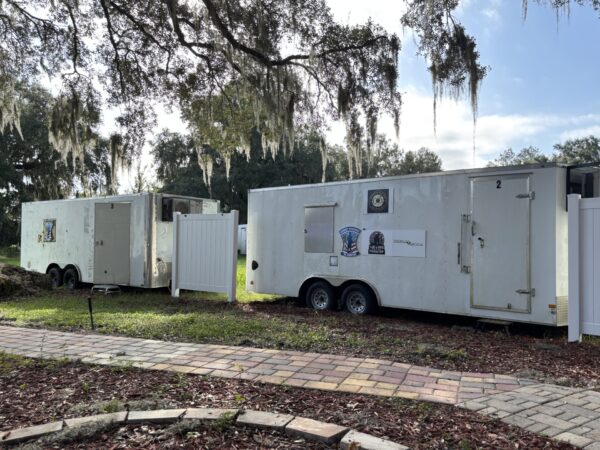
Participants were then taken to the first of several trailers built and customized for the program. Steven Large, a peer support specialist and former member of the 3rd Special Forces Group, addressed their questions or concerns before taking them to the treatment trailers. He often shares his own experience with the therapy, saying he was in a dark place just a year ago but now helps others find the same calm he got out of the experience.
His wife of three years, Kristy Roberts-Large, saw how much the therapy helped her husband and now volunteers as a medic. She watched over the participants as they sat or laid down in private rooms attached to an IV with a dose of ketamine smaller than what would be given to a toddler with a broken femur.
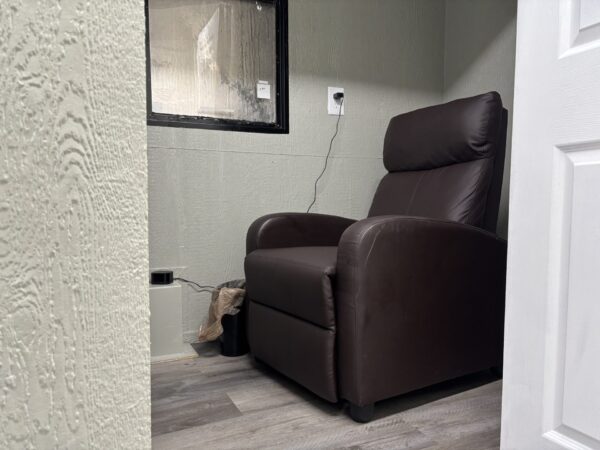
At this point, participants put on masks and headphones with custom playlists to avoid distractions. These playlists are often not in English or contain binaural beats to keep the brain from recognizing or focusing on what it should not be. While sitting with the music for anywhere from 30 to 55 minutes, participants often see colors, shapes, or loved ones, even a dragon in Espinal’s own experience. Others see just a dark room and feel peace.
Once awake, the participants talked to a peer support specialist or a therapist. They were told not to watch scary movies or listen to angry music and sent home. Therapy got scheduled between sessions, of which six have been found to be the ideal. The program returns to Combat Veterans to Careers every other month to deliver these treatments which have brought rapid and lasting relief to about 50 veterans and first responders since getting started.
Kris Hasenauer, the CEO of Emerald Medical and a former Special Forces A-Team member of 25 years, was the first to try the treatment and developed the protocol with Edil Augusto over the last four years. He found Special Operations used ketamine for pain control in the mid 2000s, which resulted in soldiers with less PTSD from battle injuries. The drug opened neural pathways around their trauma, making it less intense.
“The brain is like a chemical computer,” said Hasenauer. “Think of trauma like a computer virus. Ketamine is antivirus software.”
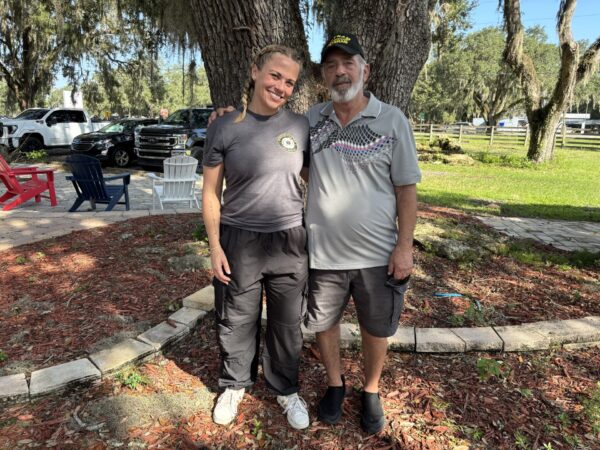
Indeed, veterans like Louis Nicosia have found this to be true. He served in Vietnam and struggled with nightmares, triggers and depression before signing up for the treatments. His wife, Phyllis, was the first to notice the difference in his demeanor, and he began to feel it, too, after his third session.
“Quite honestly, it’s the best thing that ever happened to me,” said Nicosia. “I don’t go back to Vietnam every night, I dream pleasant things.”
David Booth, the founder, president and CEO of Combat Veterans to Careers, plans to continue the nonprofit program for people like Nicosia and himself. After suffering a brain injury from an explosion in Iraq, the Army veteran underwent the therapy and felt much lighter. He has since spent 13 years in The Villages helping other veterans and first responders with anything from struggling with PTSD to finding a career.
When it comes to Operation Field Trip, each treatment per participant costs about $450, or $2,700 for all six sessions. Booth has fundraising efforts like a Fashion Show set for Oct. 30 or the annual golf tournament on Veterans Day. Some of the proceeds go to Operation Field Trip, while some goes to a suicide prevention program called “What’s Next?”
Those wishing to support this life-changing care can sponsor a veteran or first responder, donate here to support treatment scholarships, or share the mission with their community.