
Sumter County commissioners may appoint an advisory board to study options for improving the county’s ailing ambulance service.
At a workshop meeting Tuesday night, they asked County Administrator Bradley Arnold to draft a proposal for a board so they can vote on it at a regular meeting.
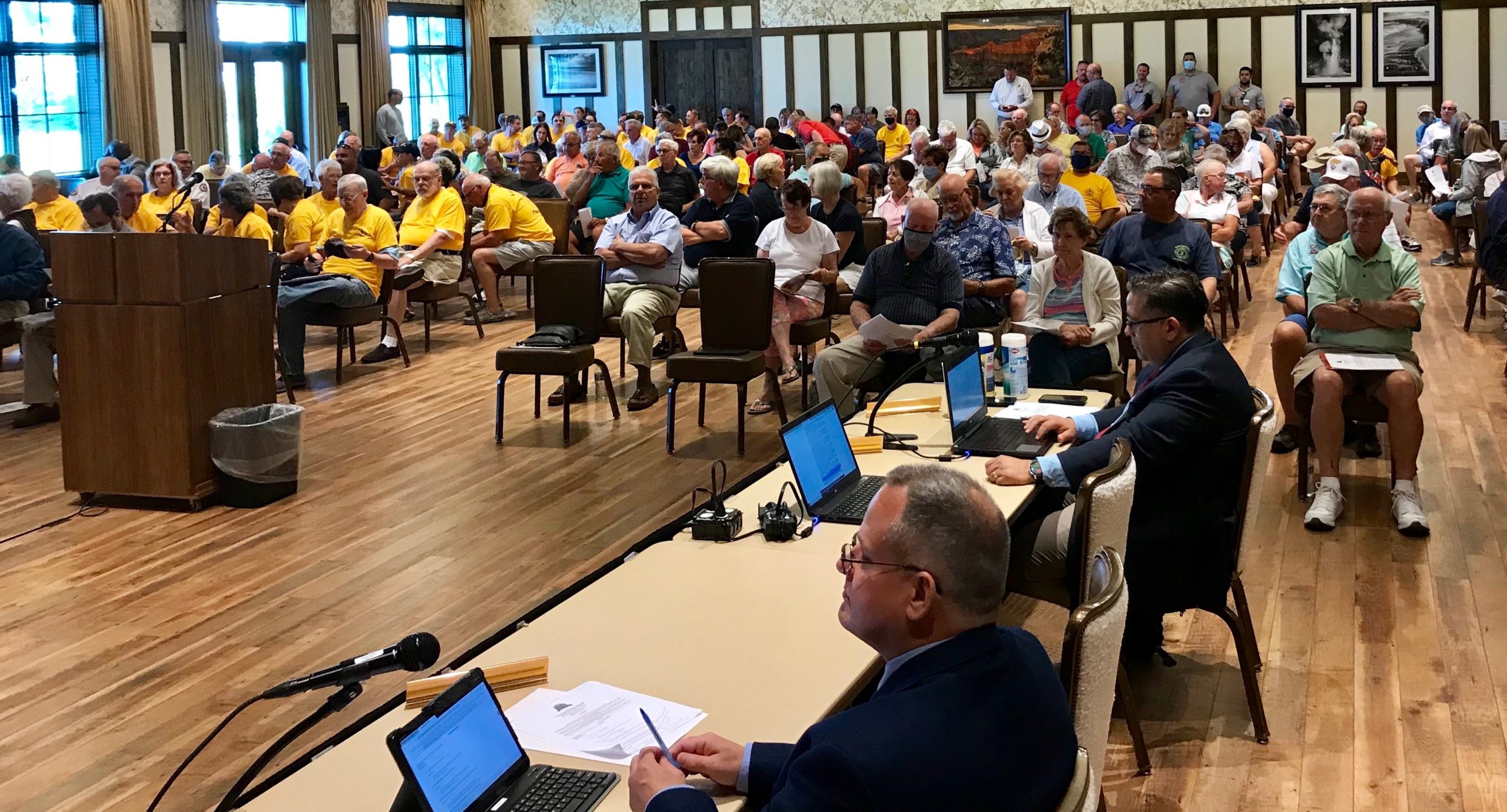
Arnold presented 10 options for modifying the ambulance service including continuing to use a private contractor, working with the University of Florida to run the service or operating it through the two county fire departments.
After hearing some details about a university-operated option, speakers during the public forum portion of the meeting endorsed consolidation of the ambulance service with the fire departments. Nearly 50 of the residents who packed the room wore yellow firefighter union T-shirts.
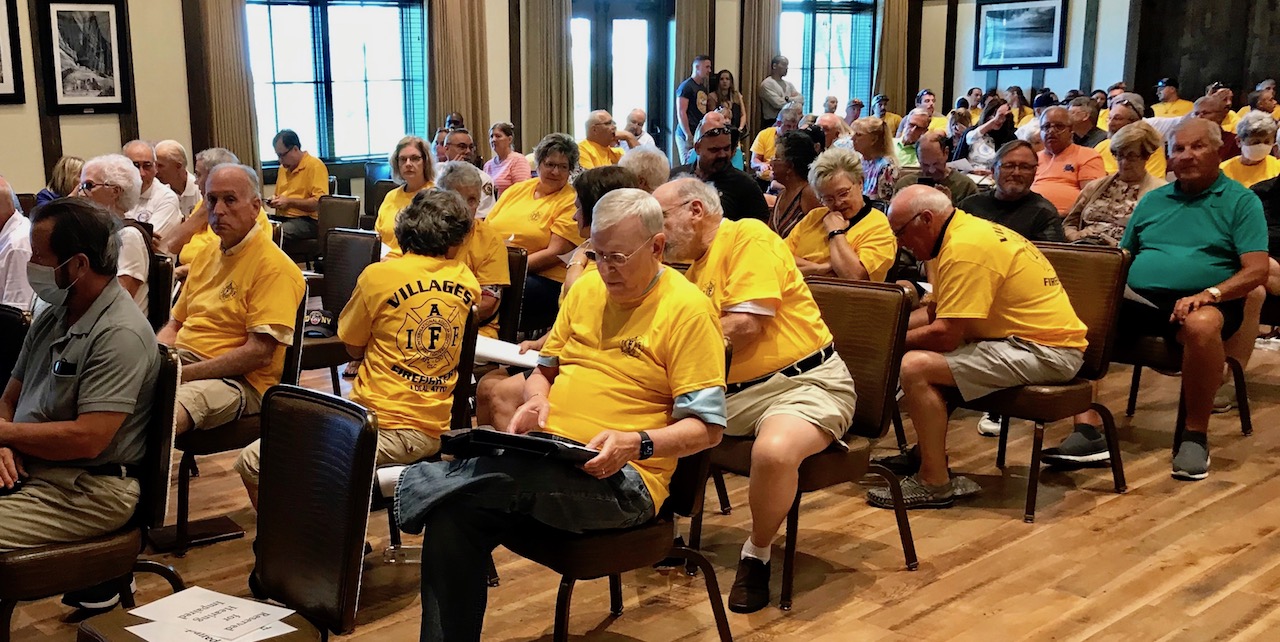
Ambulance service is Sumter County currently is provided by American Medical Response (AMR), a large national company. The company has come under fire recently for response delays of up to an hour or more on some 911 calls. The county pays about $1.2 million annually to AMR for the service under a contract that expires next year.
Assistant County Administrator Stephen Kennedy, whose wife, Christine, is the local operations head for AMR, reported that 90 percent of AMR’s response times in 2020 were within 16 minutes and 28 seconds. The AMR contract requires 90 percent of its calls in the urbanized area of the county to be within 10 minutes.
Arnold said the pandemic made shorter response times more difficult because patients needed to be segregated into COVID and non-COVID.
He said ambulance attendants often must wait to off-load patients at hospitals and that more than half of the off-load times were at least 30 minutes. Patients must be transferred to a hospital provider of equal status so a paramedic, for example, must wait to transfer a patient to at least a registered nurse. When attendants wait to off-load a patients, they are taken out of service.
Dr. Desmond Fitzpatrick of the University of Florida, who serves as medical director of Sumter County Emergency Medical Services, said a university led ambulance service could offer more flexible options depending on the patient’s needs.
He said the system would include quick response vehicles roaming through neighborhoods for calls that are not life threatening. In other cases, responders could use tele-medicine or bring patients to urgent care centers instead of a hospital.
Palm Beach County is working on implementing a similar system by the end of the year.
“What we want to do is a level above that,” he said. “We have to pay for the quality of providers and be able to attract them by our quality of care.”
Arnold said an ambulance service run by the University of Florida could coordinate with a teaching hospital that the university hopes to build in the area.
Commissioner Doug Gilpin suggested that the county appoint an advisory panel to study the options and make recommendations.
“The best patient care is what I’m looking for right now and down the line,” he said. “We’ve always had the spirit of cooperation in Sumter County and I’d like to see it continue.”
Commissioners Craig Estep and Gary Search as well as County Chairman Garry Breeden spoke in favor of the advisory board.
Commissioner Oren Miller was applauded by the packed house when he said both The Villages and Sumter County fire departments should submit proposals on how they would operate the ambulance service.
“I’m not hung up on the money,” he said. “I’m hung up on the safety and the welfare of our people.”
Most speakers during the public forum favored consolidating ambulance services with the fire departments.
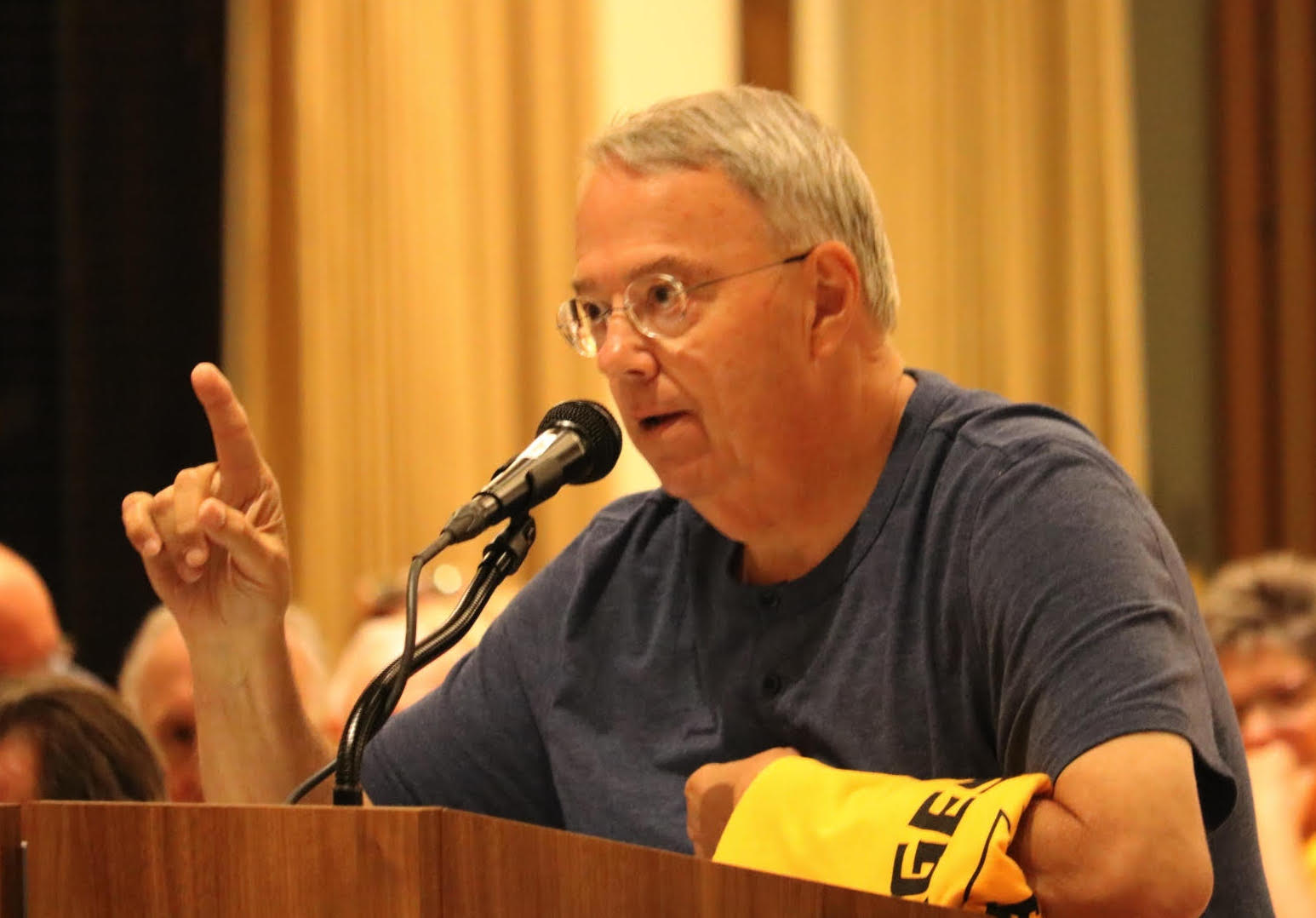
“Let’s get out of paying for and supplementing a private ambulance service,” said Villager Gail Lazenby, a retired Villages Fire Department captain and founder of the area’s AED (Automatic External Defibrillator) volunteer program. “The AMR system is broken.”
David Bussone said Arnold’s presentation of 10 options diffuses the issue of AMR response times.
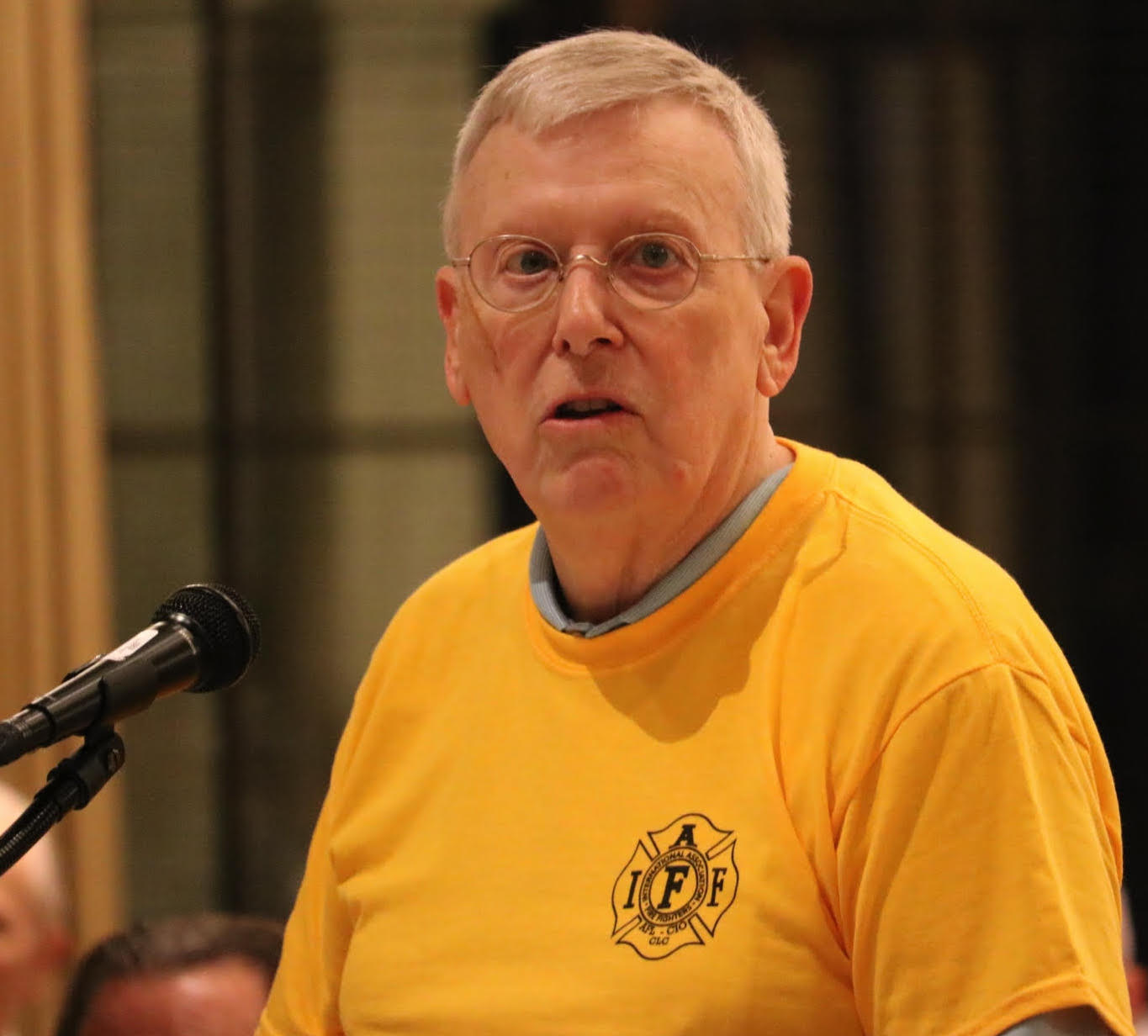
“All of the concern and hoopla is not good for morale,” he said.
Mike DiStefano, a firefighter paramedic and battalion chief with The Villages fire department, said the department already is doing a lot of the flexible care that Fitzpatrick described except for transport to urgent care centers.
Jeanne Eckes Roper, who worked 40 years as a critical care nurse, praised commissioners for supporting the creation of an advisory board.
“My first priority is to bolster what we have,” she said. “Give them the tools they need.”
Share your thoughts on what should be done at [email protected]