
Named for its whooping sound, the Whooping Crane is the tallest flying North American bird. It is an endangered crane species. Along with the Sand Hill Crane, it is one of only two crane species native to North America. The Whooping Crane’s lifespan is estimated to be 22-24 years in the wild.
A pair of these once almost-extinct Whooping Cranes have made an appearance in Central Florida. For many of our local birders this is what they call a chance to get a “lifer” (a bird they have never seen to put on their list). They also attract “twitchers.” Those committed bird watchers who travel long distances to see a new species to add to their “life list.”
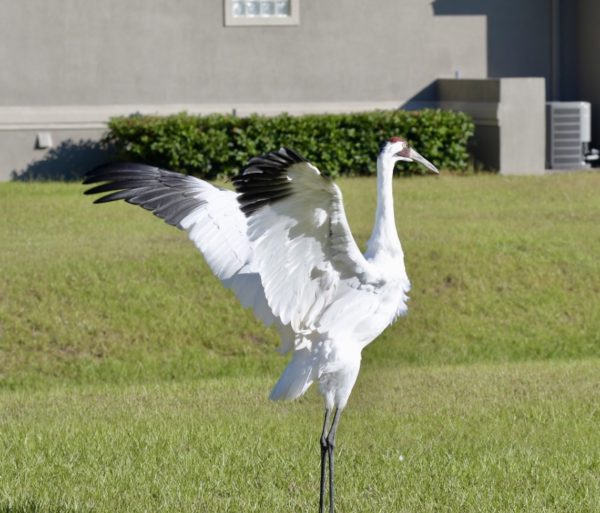
In the 1940’s it was reported that only around 40 Whooping Cranes made North American their home. Plans were put into place at that time to try to save these beautiful birds. The price tag to raise and release just one Whooping Crane could exceed $100,000.00. Because of these efforts the population of Whooping Cranes is now growing throughout the United States. Whooping cranes mate for life, usually have two eggs, where only one survive.
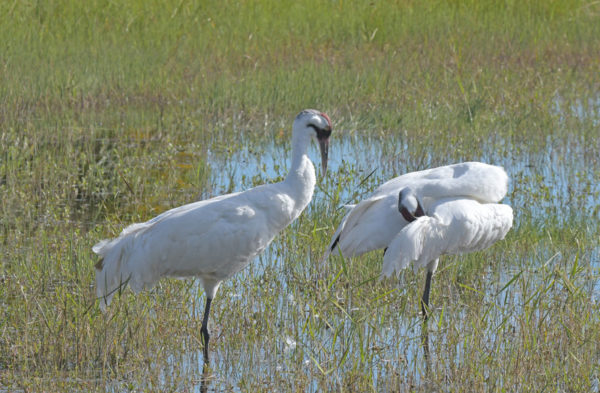
Although the species has been saved from extinction for the time, and populations are increasing, it remains the rarest of the world’s 15 crane species. It is now being reported there are over 1,000 Whooping Cranes residing in the United States, and luckily we have a pair right here in Central Florida.
Whooping Cranes have 7-8 foot wingspans, weigh up to 9-18 pounds, and stand up to 5 feet tall. Much taller, and heavier, than our local Sand Hill Cranes.